In film making, the 180-degree rule is a basic guideline regarding the on-screen spatial relationship between a character and another character or object within a scene. An imaginary line called the axis connects the characters, and by keeping the camera on one side of this axis for every shot in the scene, the first character is always frame right of the second character, who is then always frame left of the first. The camera passing over the axis is called jumping the line or crossing the line; breaking the 180-degree rule by shooting on all sides is known as shooting in the round. The object that is being filmed must always remain in the centre, while the camera must always face towards the object.
The Rule of Thirds

 The rule of thirds is a concept in video and film production in which the frame is divided into into nine imaginary sections, as illustrated on the right. This creates reference points which act as guides for framing the image. Points (or lines) of interest should occur at 1/3 or 2/3 of the way up (or across) the frame, rather than in the centre. Like many rules of framing, this is not always necessary (or desirable) but it is one of those rules you should understand well before you break it. In most "people shots", the main line of interest is the line going through the eyes. In this shot, the eyes are placed approximately 1/3 of the way down the frame.
Crossing The Line
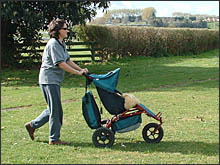
Crossing the line is a very important concept in video and film production. It refers to an imaginary line which cuts through the middle of the scene, from side to side with respect to the camera. Crossing the line changes the viewer's perspective in such as way that it causes disorientation and confusion. For this reason, crossing the line is something to be avoided.In this example the camera is located to the subject's left. The imaginary line is shown in red. The resulting shot shows the subject walking from right to left, establishing the
viewer's position and orientation relative to her. "Crossing the line" means shooting consecutive shots from opposite sides of the line.
To prevent reverse cuts, set up the scene so you can shoot it all from one side. If you are using multiple cameras, position them on the same side.
In some cases crossing the line is unavoidable, or at least desirable enough to be worth the awkward transition. In this case you can minimize confusion by using a shot taken on the line itself to go between the shots, as illustrated below. This "buffer" shot guides the viewer to the new position so they know where they are. Although it's still not perfect, it's not such a severe jolt.


Crossing the line is a very important concept in video and film production. It refers to an imaginary line which cuts through the middle of the scene, from side to side with respect to the camera. Crossing the line changes the viewer's perspective in such as way that it causes disorientation and confusion. For this reason, crossing the line is something to be avoided.In this example the camera is located to the subject's left. The imaginary line is shown in red. The resulting shot shows the subject walking from right to left, establishing the
viewer's position and orientation relative to her. "Crossing the line" means shooting consecutive shots from opposite sides of the line.
 | | |
 | |
| In this example the camera has crossed the line. As you can see in the resulting shot, the view of the subject is reversed and she appears to be walking from left to right. When cut immediately after the preceding shot, the effect is quite confusing. Because of the sudden reversal of viewpoint and action, this is known as a reverse cut. |
In some cases crossing the line is unavoidable, or at least desirable enough to be worth the awkward transition. In this case you can minimize confusion by using a shot taken on the line itself to go between the shots, as illustrated below. This "buffer" shot guides the viewer to the new position so they know where they are. Although it's still not perfect, it's not such a severe jolt.
In most "people shots", the main line of interest is the line going through the eyes. In this shot, the eyes are placed approximately 1/3 of the way down the frame.


This comment has been removed by the author.
ReplyDelete